Calne-based garden designer Alex Heath shares expert advice in our regular gardening column. As the creative force behind Sulis Design Ltd, Alex specialises in low-maintenance, climate-resilient planting and thoughtful garden lighting, helping readers create outdoor spaces that are both practical and enjoyable all year round.
by Alex Heath
April has brought warmer weather, glorious blooms and the busy hum of insects. As with the insects, it is also a busy time for the gardener with planting, sowing, mowing and keeping on top of perennial weeds. Whilst your precious flowers and vegetables are germinating so are the tendrils of bindweed,nettle stems and the bright dandelion flowers.
I find the garden a great place to escape from day-to-day work tasks. But it can be hard to relax when the weeds are growing faster than they can be controlled and there is a whole garden ahead of you. Instead, I find one area to focus 10 or 15 minutes on, either having a quick tidy of plant pots or by spending time weeding and watering. The next time I move on to another area, by doing this I find that the garden maintenance is manageable and leaves plenty of time to enjoy and relax the garden.
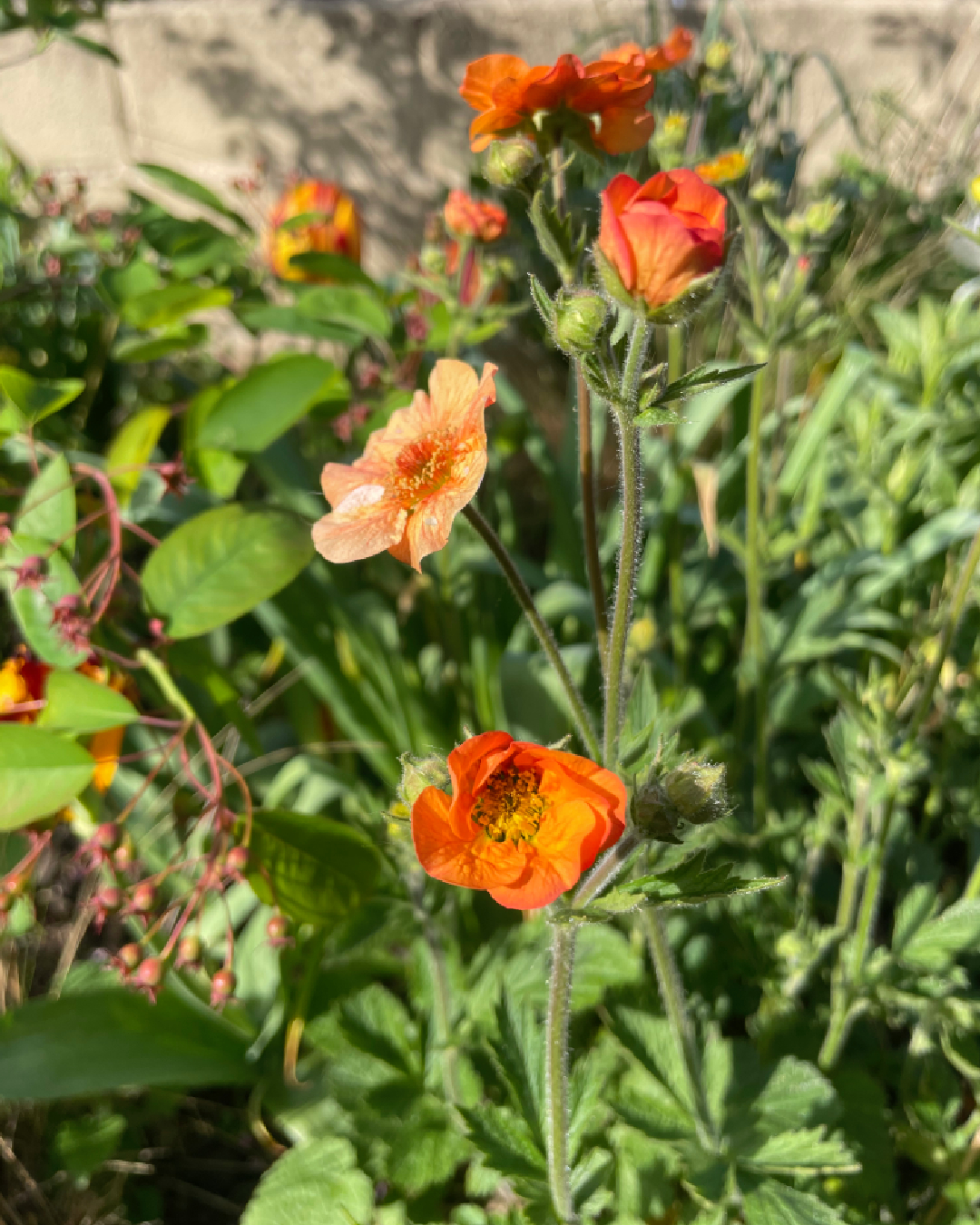
Geum
If you haven’t got a tranquil spot in your garden, the following tips will enable you to create that peaceful, calming zone.
First identify an area in your garden that you naturally gravitate to, to sit in. It may vary over time with the positions of the sun. When you are sitting there, think about all the stimulus around you – if you are close to a road and hear traffic noise, perhaps you could block this with a hedge or add something that masks it like a water feature or planting which the wind can pass through and rustle.
Consider colour palettes – in a previous article we looked at colour theory and how greens and whites are calming colours. In your calm zone consider these colours as friends as they will allow your mind to relax unlike bright and bold, reds, oranges and yellows.
Think about scent and the fragrances that stimulate a calm feeling. Whether this is lavender or honeysuckle, scent plays an important role in relaxing the mind and creating that calm space feeling.Don’t forget that some plants smell stronger at nighttime so if you want calming scents in theevening select these plants. Night scented plants are also great for pollinators such as moths.
Finally, think about texture and how smooth surfaces and natural textures will create a sense of calm,both through their aesthetic and tactile nature. Natural materials such as wood and stone will have a more appealing calm feeling than non-natural materials with sharper edges such as porcelain, steeland plastic. When using different materials in a garden try and stick to no more than three different types. Any more and you may find it confusing and overstimulating.
If you are creating a path or a seating area, break up sharp lines by allowing planting to flow over the edges of solid paths. Depending on your garden soil and aspect, planting suggestions could include Hakonechloa macra, Geranium × johnsonii 'Johnson's Blue', Phlox or Corsican mint. Be careful assome plants such as Soleirolia soleirolii also known as mind your own business provides a soft groundcover but spreads and can get out of control.
If you do create a new area I hope that you find it peaceful and relaxing.
Gardening tasks
- Feed citrus plants to keep plants looking healthy
- Mulch to retain moisture and add nutrients into the soil for existing and developing plants to flourish
- Mow and feed lawns with a high nitrogen feed to promote fresh growth
- Divide perennials in order to get more plants for free
- Tie in climbing roses
- Deadhead spring bulbs but leave foliage to die back.
- Move older pot displays to a holding location whilst the leaves die back and replace with new spring and summer bedding displays
- Keep an eye on weeds around the garden especially in the vegetable patches.
- If you can, invest in a waterbutt so you have plenty of time to collect water for the summer season.
- Finally, following new guidance from the RSPB remove bird food from your garden and the feeders.Clean and dry the feeders and store them for autumn and winter when birds will need extra support with feeding. By doing this, you will reduce the spread of disease which is currently negatively affecting our native species.
- Consider planting native plants or setting aside an area of the garden to go wild. These areas will feed the birds naturally especially if you include planting such as teasles, sunflowers, echinacea, rudbeckia and verbena.